

Table of Contents
Estimated Reading Time:
A New Generation of Imperial Stormtrooper
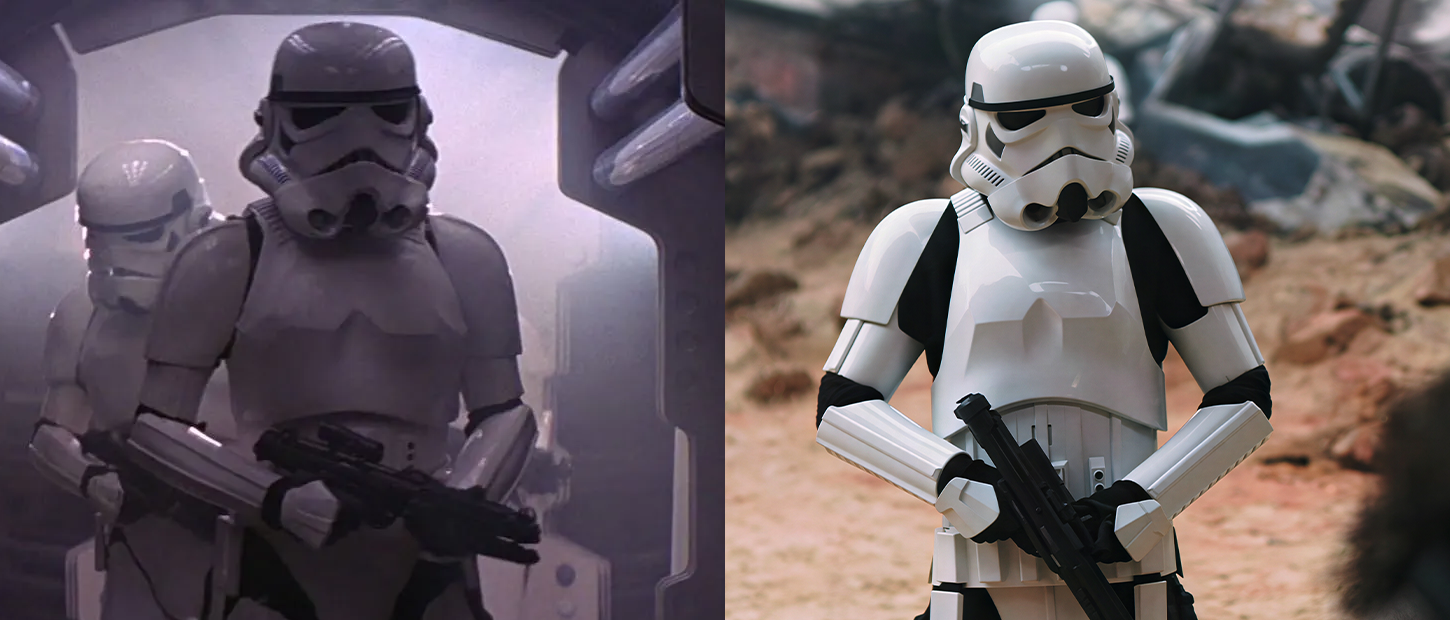
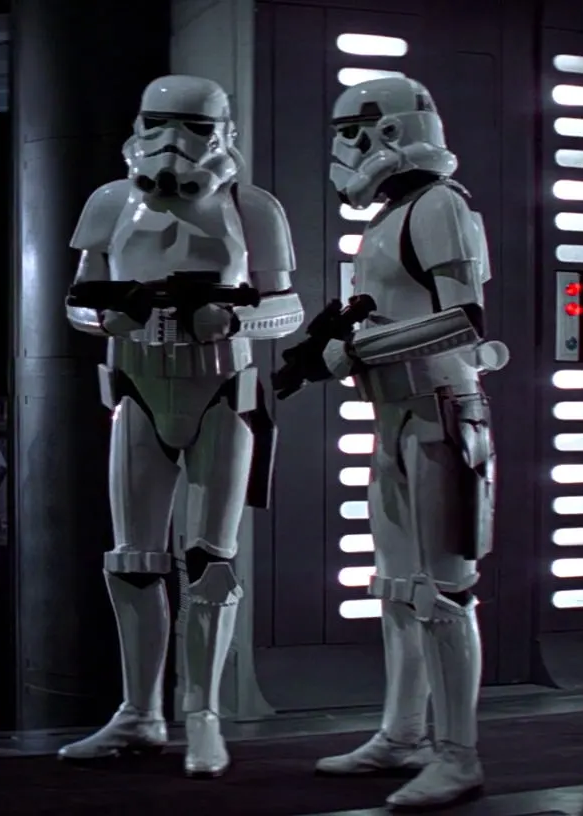
Back in the winter of 2016, Rogue One: A Star Wars Story brought audiences back to a familiar galaxy, answering one of the biggest questions from the original 1977 film: How did the Rebel Alliance obtain the Death Star plans?
Spoiler alert: that’s pretty much the entire movie.
But while Rogue One explored a previously untold chapter of the Star Wars universe, something else had happened behind the scenes. For the first time in decades, the iconic Imperial Stormtrooper was about to receive a substantial overhaul.
Following Disney’s acquisition of Lucasfilm in 2012, the filmmakers faced an interesting challenge. The classic Stormtrooper armor, originally developed for Star Wars: A New Hope in 1977, hadn’t appeared in a live-action theatrical production since Return of the Jedi in 1983. Much of the original armor had been reused and modified across the trilogy, and the surviving suits (that hadn’t been auctioned into private collections) reflected the limitations of the remaining original suits.
The traditional Stormtrooper armor was largely produced by vacuum-forming heated plastic sheets over hand-formed molds. While this technique created one of the most recognizable costumes in cinematic history, it wasn’t without its flaws. The armor could be rigid, uncomfortable, and prone to damage, particularly during more physically demanding scenes. In many case, different versions of the armor were produced depending on the use case, dubbed “stunt” or “hero.”
For Rogue One, the production team finally had an opportunity to revisit the design with modern manufacturing techniques while preserving the unmistakable silhouette audiences had known for nearly 50 years… and they took full advantage of it.
Rather than simply reproducing the original costumes, the armor was extensively redesigned from the ground up. The new suits featured revised proportions, updated details, and a different approach to construction altogether. Based on available production references and examination of the surviving armor, the new components are believed to have utilized a cast or injected urethane-based manufacturing process rather than relying exclusively on traditional vacuum-formed plastic.
The result was a new generation of Stormtrooper armor that retained its familiar, intimidating appearance while offering improved flexibility, durability, and freedom of movement.
For the first time, Stormtroopers could perform more demanding physical actions without their armor becoming quite as much of an obstacle. And perhaps most importantly, after nearly four decades of speculation, fans finally had an answer to one of the galaxy’s greatest mysteries:
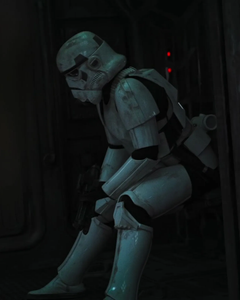
Can a Stormtrooper actually sit down?
As it turns out, yes… for the most part.
Apparently, all it took was a few decades and a substantial costume redesign.
This updated interpretation would become known throughout the costuming community as the Anthology Stormtrooper, named in reference to the standalone Star Wars anthology films that began with Rogue One.
But the story of this armor didn’t end in 2016. Its design would continue to evolve through subsequent productions, like the later-release Solo: A Star Wars Story film, as well as the hit Disney+ shows including The Mandalorian, Obi-Wan Kenobi, Andor, and Ahsoka, which introduced additional changes that make the modern Stormtrooper a fascinating subject for anyone interested in history, construction, or even owning a piece of history.
Original Trilogy vs. Anthology: What Actually Changed?
Simply put? A lot.
But that doesn’t exactly make for a particularly informative article, does it?
When developing the Stormtrooper armor for Rogue One, the filmmakers used the original trilogy costumes as their foundation. However, rather than reusing the original armor components, the entire suit was redesigned and recreated from the ground up.
Interestingly, despite having the freedom to modernize nearly every aspect of the costume, the designers made a conscious effort to preserve many of the characteristics that made the original Stormtrooper so recognizable. The result was an entirely new suit that, at first glance, looked remarkably familiar.
Look a little closer, though, and the differences become much more apparent.
The Helmet: Familiar, but Entirely Different
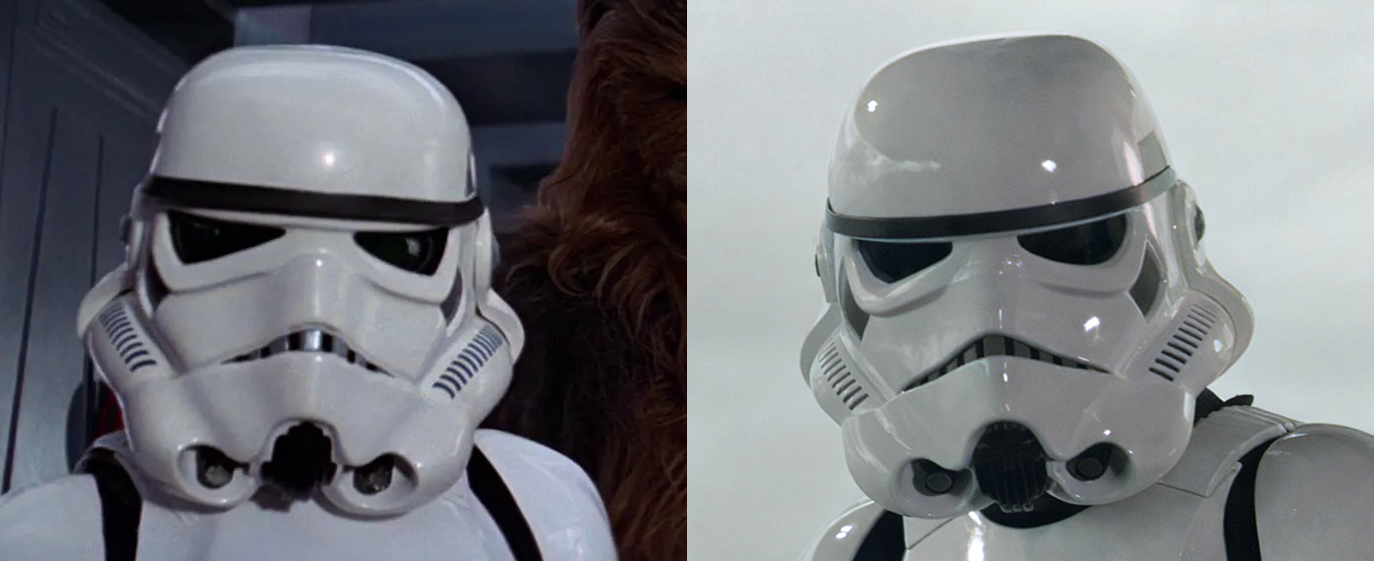
Perhaps the most recognizable changes can be found in the helmet.
While the overall silhouette remains faithful to the original trilogy, nearly every individual detail received some degree of refinement. The ears, for example, became noticeably more robust, while the vocoder—the distinctive black detailing across the chin—was redesigned wholly as a separate physical component rather than simply being a painted on the helmet.
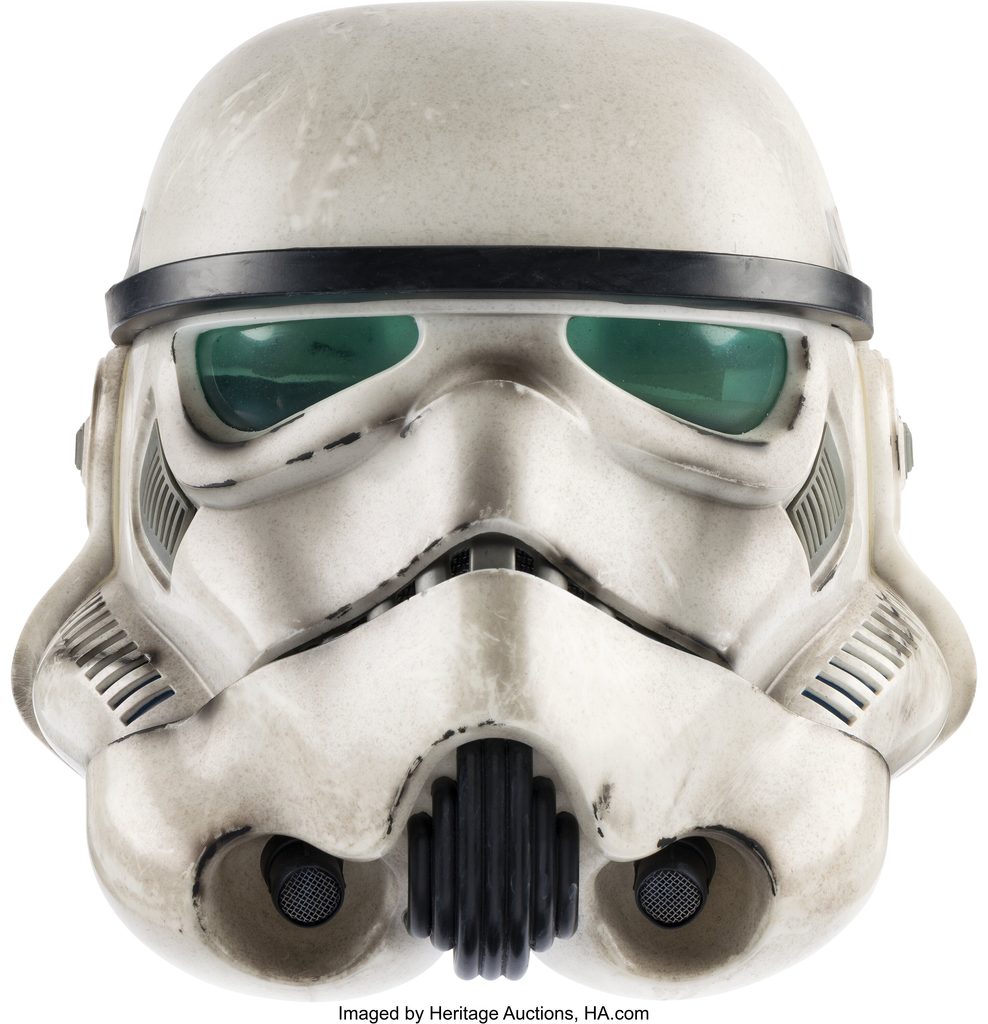
Other familiar details received similar treatment. The original trilogy’s aerators, commonly referred to as mic tips, famously originated from repurposed hardware components. For Rogue One, these were redesigned as purpose-made pieces that retained the familiar appearance while incorporating more defined detailing.
Even the blue tube stripes along the helmet’s cheeks received an overhaul. Rather than the painted or stenciled markings found on the original helmets, the Anthology Stormtrooper design features recessed openings backed by blue-colored material, giving the stripes actual depth. This approach extends to several other areas of the helmet, including the grey detailing beneath the eyes and the grey components located at the front and rear of the helmet’s dome. Rather than relying on hand painted details to create the appearance of depth, these elements now incorporate actual cutouts and recessed features.
But one of the most interesting changes involves something the designers deliberately chose not to eliminate: asymmetry.
The original trilogy helmets are famously asymmetrical, with many of their distinctive irregularities stemming from the original sculpting and manufacturing processes. Although the Anthology helmets were developed using modern digital modeling and fabrication techniques, the designers retained subtle elements of that original character.
One particularly recognizable example is the small bump above the wearer’s right eye, a characteristic inherited from the original helmet design. So while the Anthology helmet is considerably more refined and symmetrical overall, it isn’t perfectly symmetrical—and that appears to have been intentional.
The ears provide another subtle example of this modernization. Where the original trilogy helmets used traditional pan-head screws, the newer design incorporates a cleaner, rivet-style appearance.
And that’s only scratching the surface.
Chest, Back, and Abdomen: A More Integrated Design
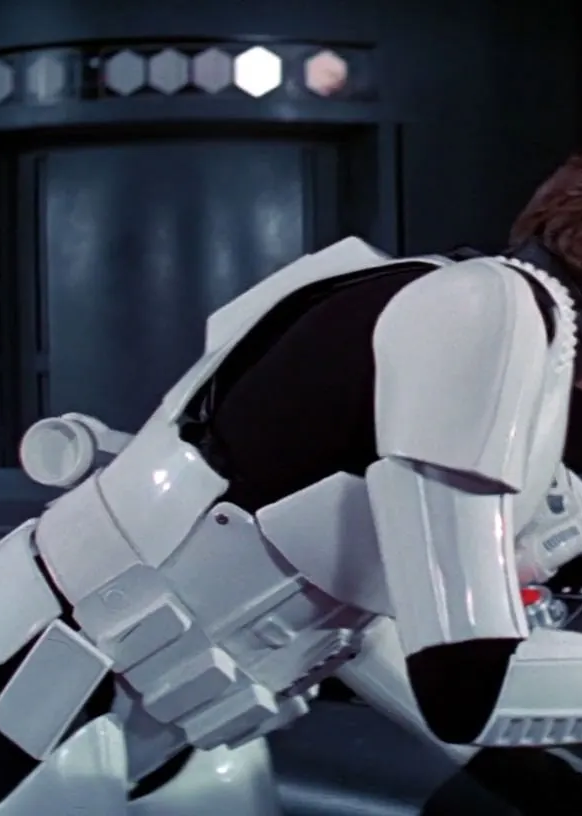
Moving beyond the helmet, the torso armor received equally significant changes.
The chest and back plates now feature recessed slots designed to accommodate the shoulder straps, rather than relying on the more externally mounted arrangements associated with the original trilogy suits.
The abdomen also received a substantial redesign. The familiar arrangement of colored buttons remains on the lower mid-section, but the surrounding geometry is now far more pronounced, or even chiseled some would say. Raised and recessed details give the center panel a level of definition that wasn’t achievable in quite the same way with the softer contours of the original vacuum-formed armor.
The sides of the chest and back were also reworked, incorporating black connecting bridges—often referred to as wings—that help join the two sections together. This replaces some of the more traditional riveted connections found on the original costumes, while also adding another layer of depth to the suits. These changes weren’t simply cosmetic. They reflected a different approach to how the armor was assembled and worn, and further refined after years of use.
Arms and Legs: More Detail, Greater Flexibility
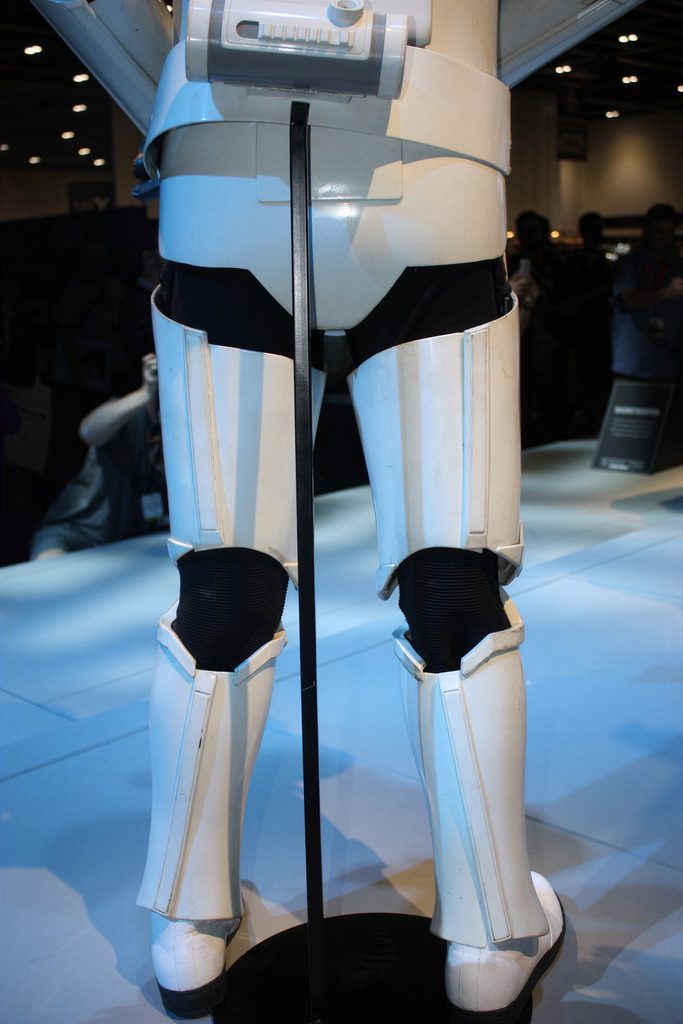
The changes continue throughout the arms and legs.
One of the most noticeable refinements involves the cover strips running along the armor’s seams. On the original trilogy suits, these were relatively simple strips of ABS plastic adhered over the joints. The Anthology armor takes a more integrated approach, incorporating defined borders and recessed grooves that make the cover strips appear as intentional design elements rather than separate pieces used to conceal a seam.
Even the hand guards received attention, featuring a thicker overall profile and a distinctive pill-shaped indentation near one end. Because apparently, no detail was too small to revisit.
Perhaps the most significant functional change, however, was the introduction of more flexible closures throughout the suit.
Several components, including the biceps and thighs, feature an open-back construction that utilizes flexible rubber cords. Rather than enclosing the wearer’s limbs within rigid, fixed-size armor, these connections allow the components to expand and contract as the wearer moves. This approach also helped accommodate performers with different body proportions without requiring an entirely unique set of armor for every individual.
Combined with the revised construction and materials, these changes gave performers greater freedom of movement and made the armor better suited to the physical demands of modern filmmaking.
Running, crouching, fighting, falling—and occasionally providing another unfortunate contribution to the galaxy’s collection of Wilhelm screams—became considerably more practical.
A Familiar Design, Reimagined
What makes the Anthology Stormtrooper particularly interesting is that so much of the original design remains recognizable, despite nearly every component having been reconsidered.
The filmmakers weren’t attempting to replace the iconic appearance of the original Stormtrooper. Instead, they sought to preserve its unmistakable identity while addressing decades of manufacturing limitations and introducing a level of detail better suited to modern filmmaking. With advancements in digital cinematography, 4K resolution, IMAX presentation, and increasingly sophisticated camera technology, costume details that might have gone unnoticed in 1977 could now be captured and scrutinized with remarkable clarity.
The result is an armor design that feels unmistakably Imperial, yet represents an entirely different generation of costume construction.
How the Design Continued to Evolve
Following the release of Rogue One, Star Wars fans were eager for more stories exploring the galaxy beyond the original trilogy. With Disney+ on the horizon and a growing lineup of live-action productions being announced, there was plenty of opportunity to revisit familiar characters, locations, and, of course, the iconic Imperial Stormtrooper.
One of the most anticipated projects was The Mandalorian, which debuted alongside Disney+ in November 2019. Set several years after the fall of the Empire in Return of the Jedi, the series promised a glimpse into a galaxy struggling to find its footing in the aftermath of Imperial rule. And naturally, that meant we’d be seeing more Stormtroopers.
The Mandalorian: Remnants of the Empire
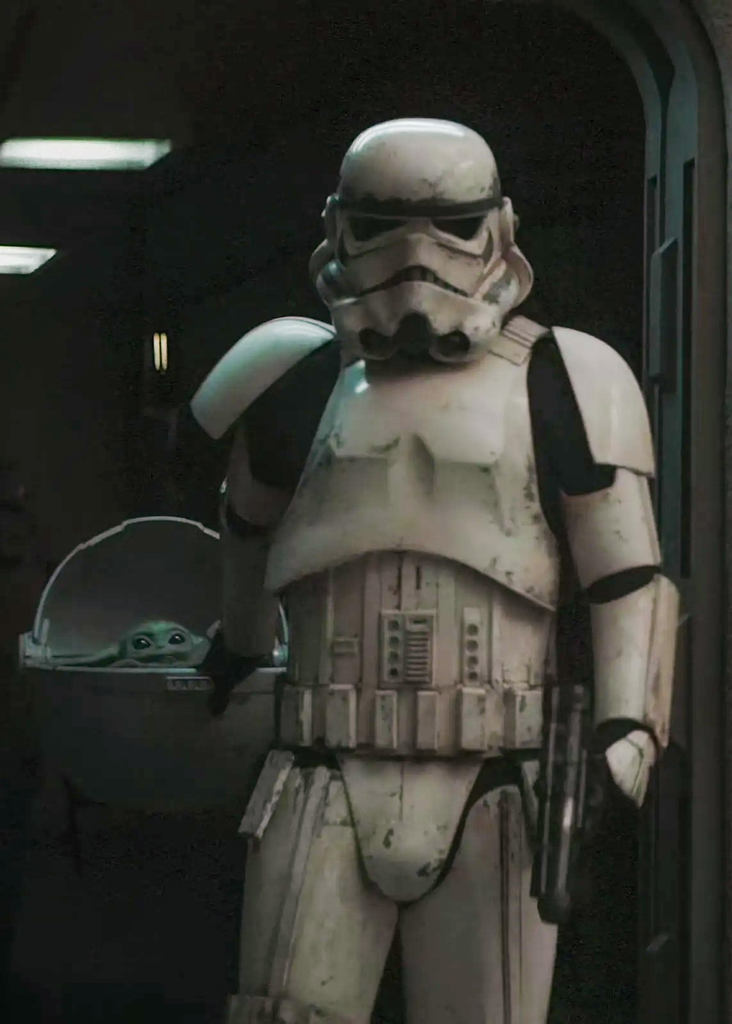
The Stormtrooper armor featured in The Mandalorian appeared to carry over much of the design introduced in Rogue One, but with one significant difference: these weren’t the pristine soldiers of an Empire at the height of its power. These were Imperial Remnants.
The once-polished white armor was now heavily weathered, scuffed, and worn, reflecting years of service without the resources of a functioning Imperial military. Some suits featured missing thermal detonators, shortened thigh armor, and even variations in helmets altogether. While the underlying armor remained largely familiar, these differences helped establish the visual identity of Stormtroopers serving a fractured Empire.
However, the most interesting developments were still to come.
Obi-Wan Kenobi and Andor: Refining the Armor
With subsequent productions such as Obi-Wan Kenobi and Andor, the Stormtrooper armor received another round of refinements. The involvement of additional costume and prop specialists, including FBFX, brought changes that went beyond simply adjusting the appearance of the suits.
Some of these improvements addressed practical issues that had become apparent during earlier productions.
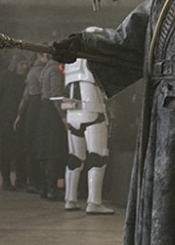
For example, attentive viewers may have noticed Stormtroopers in Rogue One and The Mandalorian experiencing occasional wardrobe malfunctions. The rear spine, sometimes referred to as the trauma plate, could become detached during filming. In other instances, the lower mounting tabs securing the rear belt assembly could break, leaving the belt visibly sagging. Not exactly the level of uniform inspection you’d expect from the Galactic Empire, and all of it’s wealth.
Later iterations introduced revisions intended to address these weaknesses. One particularly notable change involved the spine plate, which was redesigned to incorporate mounting holes allowing the thermal detonator to be secured through the rear belt and into the assembly. This provided a more integrated attachment method and helped prevent the rear components from separating during use.
The thigh armor also received subtle but noticeable refinements. Earlier versions featured a relatively abrupt transition along the upper edge of the front cover strip. Later examples introduced a smoother, more continuous bevel, bringing the detailing more closely in line with the cover strips found on the shins and arms.
These may seem like insignificant changes, but they’re precisely the kinds of details that distinguish one generation of Anthology armor from another, no different than the changes we saw even during the original trilogy throughout the three films.
Helmet Refinements and On-Set Comfort
The helmets weren’t exempt from further development, either.
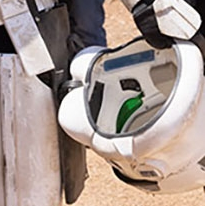
One subtle change involved the grey detailing beneath the eyes. Later examples incorporated additional openings behind these components, allowing improved airflow and ventilation for performers wearing the helmets for extended periods. Considering the amount of time actors and background performers can spend inside full armor under studio lighting, or when directors opted to film on location, even relatively small improvements to comfort and ventilation can make a meaningful difference.
Other internal construction details and strapping arrangements were also refined, helping the costumes remain secure while accommodating the movement required on set.
From Cast-in-Color to Painted Finishes
Perhaps one of the most visually significant developments involved the armor’s finish.
Earlier Anthology Stormtrooper components were predominantly understood to have been cast in color, with colored pigment mixed into the urethane material before the components were produced. This allowed the material itself to either retain its white appearance, or be colored something entirely different without a worry of scratches or paint chipping.
As the armor continued to appear in subsequent productions, however, painted finishes became increasingly evident on certain surviving and publicly displayed examples. The exact reasons for this change aren’t entirely clear. It may have reflected differences in manufacturing, maintenance, repairs, or simply the practical requirements of keeping costumes looking consistent across productions.
At recent Star Wars Celebration exhibitions, some displayed armor has shown evidence of paint application and overspray, suggesting that at least certain components received additional finishing or touch-ups. This distinction is particularly interesting to future builders attempting to reproduce a specific version of the armor, as the surface finish can influence both the appearance and long-term maintenance of a completed suit, not unlike reproductions of the original armor.
Small Details, Different Productions
Beyond the more substantial construction changes, the armor also developed a collection of smaller variations.
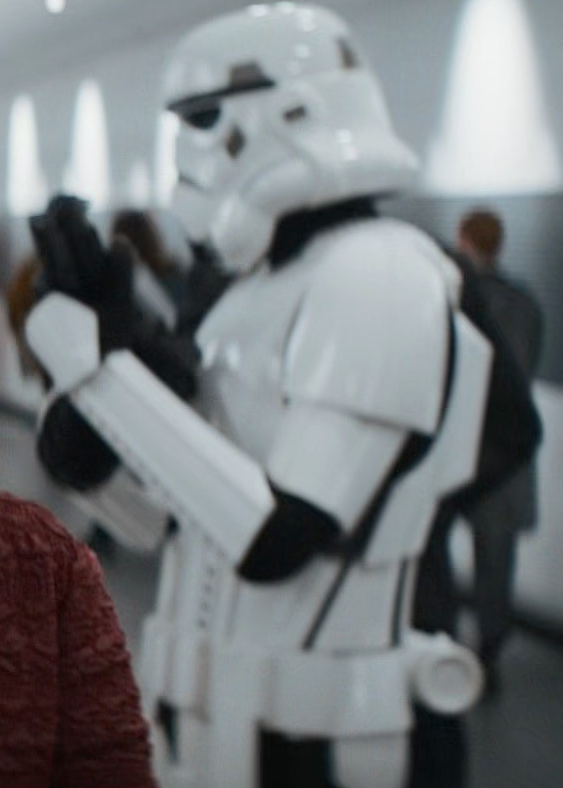
The thermal detonator, for example, has appeared with different end-cap finishes. Some examples feature grey end caps, while others retain the familiar white appearance. Certain suits have also featured red detailing on the detonator’s buttons, while others remain entirely white.
Additional differences can be found in the internal strapping, attachment methods, and individual armor components, although many of these changes are subtle enough to escape notice during normal viewing. Taken individually, these variations might seem insignificant. Together, however, they illustrate an important point:
There is no single, completely uniform version of the modern Anthology Stormtrooper.
The armor introduced in Rogue One established the foundation, but subsequent productions continued to adapt and refine it. Some changes were cosmetic, others improved durability or comfort, and a few addressed weaknesses that only became apparent after the suits had spent considerable time in active use.
For costume builders and enthusiasts pursuing screen accuracy, understanding these differences is essential. A suit based exclusively on its 2016 appearance may differ in several meaningful ways from one seen in Obi-Wan Kenobi, Andor, or later productions.
And it’s this ongoing evolution that makes the modern Stormtrooper such an interesting project to recreate.
Building Your Own Anthology Stormtrooper Armor
Of course, all of this knowledge is great to have, but let’s be realistic—you’re probably here because you want to build your own Anthology Stormtrooper armor, right?
Nearly a year ago, I set out on my own journey to recreate this modern generation of Stormtrooper armor. After months of searching for files that met my expectations, I eventually decided to take on a rather ambitious challenge: design it myself.
Modeling an entire suit of armor from scratch is no small feat, but from the beginning, I’ve been deliberate about gathering as much information as possible. That meant studying not only the original Stormtrooper designs from the 1970s, but also the countless refinements introduced throughout the last decade.
Along the way, I’ve been incredibly fortunate to work with scans of original production pieces, including a screen-used helmet from Rogue One, as well as connect with industry insiders who have firsthand knowledge of the costumes and, in some cases, were directly involved in their development and use.
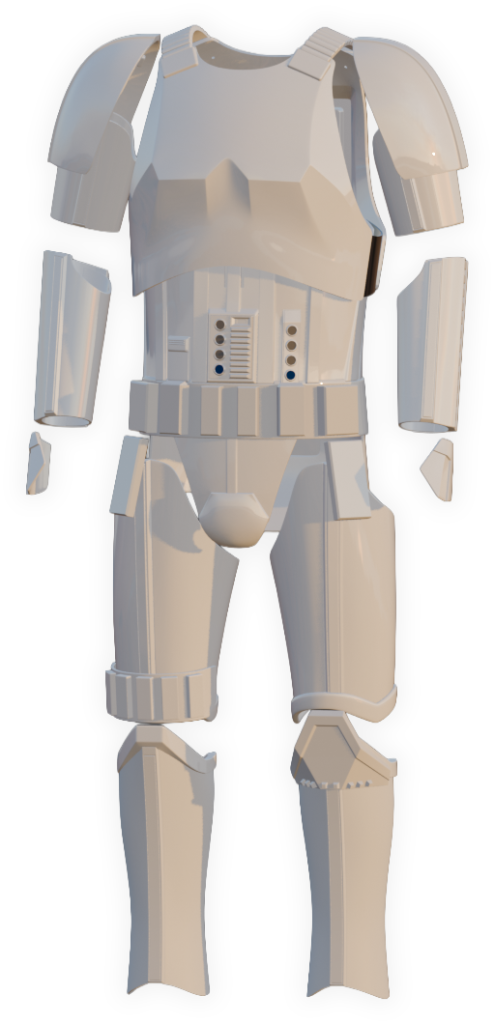
Between hundreds of screen captures, detailed photographs of costumes displayed at conventions, behind-the-scenes references, and information about the armor’s internal construction and strapping systems, I’ve spent countless hours compiling and translating this research into my own Anthology Stormtrooper Armor STL files, specifically optimized for 3D printing.
Now, without access to scans of every individual component, I don’t believe any recreation can genuinely claim to be 100% screen accurate. However, my goal has always been to create some of the most accurate Anthology Stormtrooper armor files available, and I’ve been fortunate enough to have individuals with firsthand industry experience examine my work and provide feedback throughout that process.
Of course, accuracy is only part of the equation.
I’ve also taken certain creative liberties to make the armor more approachable for builders recreating these costumes from the comfort of their own homes. Features such as alignment keys help simplify assembly and gluing, while integrated magnetic closures in the shin armor make suiting up considerably easier without sacrificing the overall outer appearance.
These aren’t necessarily features found on the original production costumes, but they’re deliberate improvements intended to make the building and wearing experience more enjoyable.
Ultimately, every decision has been made with the builder in mind—from the first print to the moment you step onto the convention floor.
The goal is simple: preserve the unmistakable appearance and heritage of the Imperial Stormtrooper while making it easier than ever to build one of your own.
Explore the Anthology Stormtrooper Armor STL Files
Image Credits & Disclaimer
Film and television screenshots appearing in this article are sourced from Star Wars productions and are included for the purposes of commentary, criticism, and visual comparison of costume designs.
Star Wars and all related characters, costumes, trademarks, and imagery are the property of Lucasfilm Ltd. and/or their respective rights holders.
Novice Lab Works is an independent creator and is not affiliated with, sponsored by, or endorsed by Lucasfilm Ltd. or The Walt Disney Company.