

Table of Contents
Estimated Reading Time
So, you’ve decided you want to become a Stormtrooper… but where exactly do you begin?
If you’ve spent any amount of time researching how to build a Rogue One Stormtrooper costume, you’ve likely realized that it’s not quite as straightforward as purchasing a set of armor and calling it a day. Between the various iterations of the costume from the Original Trilogy to the new Disney-era, there are a ton of different manufacturing methods for armor, various soft goods, endless strapping, and the seemingly loooong list of other components; suffice it so say, it can become a little overwhelming.
Having gone through much of this process myself, I wanted to put together a resource for those looking to build their own Rogue One Stormtrooper costume. And no, you don’t necessarily need a 3D printer to do so.
Today, we’ll explore the different avenues available to prospective builders yourself, the advantages and disadvantages of each armor, what you’ll need to complete your costume, and what you can realistically expect in terms of time involved, as well as the cost invested in such a task.
But before we get into all of that, let’s establish exactly which Stormtrooper we’re talking about.

A Brief History: What Is the Rogue One Stormtrooper?
In the winter of 2016, Rogue One: A Star Wars Story introduced audiences to a new iteration of one of the most recognizable costumes in cinematic history: the Imperial Stormtrooper.
While the costume itself retained much of the familiar silhouette established nearly four decades earlier in Star Wars: A New Hope (1977), a closer look at the armored reveals that it underwent a rather extensive redesign. From the helmet and individual armor components to the introduction of ribbed gaskets on the undersuit, and a list of changes in how the armor was assembled and worn. All this to say, there’s considerably more to this redesign than what initially met the eye.
This new generation of Stormtrooper armor would go on to appear, with various modifications, throughout subsequent Star Wars productions, including The Mandalorian, Obi-Wan Kenobi, Andor, and Ahsoka, just to name a few. It’s for this very reason that I often refer to this generation of Imperial armor here as the Anthology Stormtrooper. While its origins can be traced back to Rogue One, the costume itself has become a staple of modern Star Wars productions.
For the purposes of this guide, I’ll primarily be referring to the standard-issue white Imperial Stormtrooper of the newer generation, rather than its pre-2000s predacessors.
Choosing the Right Armor
Perhaps one of the biggest decisions you’ll make when embarking on this journey is determining which type of armor is right for you.
I know, at face value, this seems like a fairly straightforward decision. However, with the growing popularity of the newer Star Wars films and television series, vendors continue to pop up seemingly overnight, each with their own interpretation of the armor and, with that, their own methods of manufacturing it.
While the Original Trilogy Stormtrooper armor was produced using traditional vacuum-forming techniques, there are considerably more avenues available to prospective builders today. From traditional vacuum-formed plastic and fiberglass to the ever-growing world of 3D printing, each method of manufacturing armor comes with its own unique set of advantages, disadvantages, and challenges.
And despite what you might expect from someone who develops and sells 3D printable armor files, I wouldn’t necessarily suggest that 3D printing is the right solution for everyone. Your budget, experience, access to tools, and the amount of time you’re willing to invest in the project are all factors worth considering before committing to a particular type of armor.
So, let’s take a look at some of the most popular options available to you:
Vacuum Forming
A tried-and-true method of manufacturing Stormtrooper armor. Most vendors today opt for vacuum-formed ABS plastic, typically a few millimeters thick to provide a balance between flexibility and durability.
Advantages
- Generally cost-effective.
- Lightweight and flexible.
- Smooth surface finish, depending on the grade of plastic used.
- Little-to-no surface preparation with most kits, aside from painting accent details.
Disadvantages
- Limited sizing options.
- Most kits require some degree of trimming.
- Susceptible to yellowing, cracking, or splitting over time.
- The vacuum-forming process can soften the sharper edges and finer details characteristic of modern Stormtrooper armor.
Fiberglass
A popular choice among many of the early builders of the Rogue One Stormtrooper. While fewer vendors offer fiberglass armor today, it remains a viable option for those looking for rigid armor with well-defined details.
Advantages
- Rigid and generally strong.
- Quality castings can be nearly paint-ready, requiring relatively little surface preparation.
- Well-defined edges and fine surface details.
- Smooth, consistent contours.
Disadvantages
- Generally requires painting and some degree of post-processing.
- Typically heavier than vacuum-formed armor, particularly when additional reinforcement is used.
- Limited sizing options.
- Potentially long lead times and international shipping costs.
- Surface detail can deteriorate as production molds wear over time.
- Appropriate respiratory, eye, and skin protection is essential when cutting, sanding, or drilling.
3D Printing
The newest of the three methods and an increasingly popular option among costume builders. While far from a perfect solution, 3D printing offers a greater degree of control and customization, and can be one of the most cost-effective avenues, depending on your circumstances.
Advantages
- Greater control over the sizing of individual armor components.
- Compatible with most modern FDM printers when components are appropriately split.
- Access to a growing selection of highly detailed digital models.
- Potential for substantial savings when purchasing filament in bulk.
- Replacement components can be printed as needed.
Disadvantages
- Overall costs can vary significantly.
- Generally requires considerably more sanding, filling, priming, and painting.
- Requires access to a 3D printer or a third-party printing service.
- Significant time investment in printing and finishing components.
- Accuracy varies considerably between artists. Some digital models fall well short of existing vacuum-formed or fiberglass kits.
EVA Foam
An affordable, lightweight, and flexible alternative, EVA foam is a fantastic material for casual cosplay, Halloween costumes, and those looking to undertake a project without a significant financial investment.
However, replicating the sharp edges, fine surface details, and semi-gloss finish characteristic of the Rogue One Stormtrooper presents a number of additional challenges when working with foam. With relatively few costume-specific templates available, much of the accuracy of the finished costume comes down to the individual builder’s skill and experience.
While certainly a viable avenue for some builders, the remainder of this guide will focus primarily on rigid armor construction.
But, Is There Really a “Right” Approach?
The reality is that, as of writing this article, there isn’t necessarily a “right” approach to building your own Rogue One Stormtrooper costume, yet.
Since the original production costumes were manufactured using a combination of cast urethane and injection-molded components, and none of the three primary methods outlined above truly replicate both the look and feel of their screen-used counterparts. Each offers its own unique set of advantages and disadvantages, and with that comes a certain degree of compromise.
To faithfully reproduce the armor using the original manufacturing methods and materials would be a rather expensive undertaking. Between the development of the necessary molds, tooling, raw materials, and labor involved, a proper replica costume could easily cost several thousand dollars, and that’s before assembly and all of the remaining components needed to complete the job.
While several makers have hinted at the development of something like this over the years, to my knowledge, we’ve yet to see a commercially available replica that faithfully reproduces both the geometry and material composition of the original production armor. Ultimately, it comes down to what matters most to you as a builder.
Is it screen accuracy? Affordability? Comfort? Ease of assembly? Or perhaps the satisfaction of building something yourself from the ground up? Until a truly faithful reproduction of the original production costume becomes commercially available, it’s about determining which compromises you’re willing to make and which method best aligns with your own expectations.
So, Where Do You Buy Your Armor
With the differences now clearly designed, and the various methods of manufacturing armor closely examined, the next logical question is: where do you actually get your hands on a set?
❯ Vacuum-Formed Armor
As of writing this, Imperial Surplus offers what I personally consider to be one of the best commercially available vacuum-formed kits for the Rogue One Stormtrooper. There are alternatives available from vendors such as 850 Armor Works, and Walt’s Trooper Factory (WTF) continues to develop its own rendition of the armor.
As with any armor purchase, I’d encourage you to look at completed builds from each respective vendor, paying particular attention to the finer details, proportions, and how the individual components come together.
Some vendors tend to showcase their kits through photographs of individual armor components laid out on the ground, with little to no imagery demonstrating how the armor actually looks when assembled and worn. While these photos can certainly be useful when examining individual components, they don’t always paint the full picture.
Remember, a collection of individually convincing armor components doesn’t always translate into a convincing Stormtrooper costume. If possible, I’d advise seeking out some completed customer builds and photos of the armor being worn from multiple angles before committing to a purchase.
❯ Fiberglass Armor
If fiberglass is the avenue you’d prefer to pursue, Jim Tripon, otherwise known within the community as Jimmiroquai, offers what is, to my knowledge, the only commercially available fiberglass armor kit specifically developed for the Rogue One Stormtrooper.
His armor has been a staple within the Rogue One Stormtrooper costuming community for years, particularly among some of the earliest builders of this generation of Imperial armor.
Jim operates primarily through Facebook, with his armor kits manufactured and shipped directly from the Philippines. If you’re fortunate enough to be embarking on your armor-building journey alongside a few other enthusiasts, you may be able to coordinate a group buy, as others within the community have successfully done in the past, to help offset international shipping costs.
That said, be prepared for potentially extended lead times, both in the production and delivery of your armor. Depending on where you’re located, international shipping surcharges, import duties, and other associated fees may also need to be factored into your overall budget.
❯ 3D Printable Armor
This is where things become a little more subjective. With the growing number of independent artists offering their own interpretations of the Rogue One Stormtrooper, choosing the right set of files ultimately comes down to your own expectations regarding accuracy, the assembly and documentation, and, of course, your budget.
There are a number of independent artists offering files through platforms such as Etsy and CGTrader, as well as those who distribute their files through their own respective websites, similar to this one.
Now, if you’ll allow me a moment for a shameless plug…
Here at Novice Lab Works, I’ve independently developed my own version of the Anthology Stormtrooper armor. Having spent countless hours researching, modeling, printing, assembling, and physically testing the armor myself, I’ve come to appreciate just how much goes into developing a set of files that not only looks the part, but can practically be assembled and worn.
Of course, I’d love for you to consider my files for your own build, but more importantly, I want you to make an informed decision. Regardless of whose files you ultimately decide to purchase, there are several things I’d encourage you to take into consideration before committing to a project of this magnitude.
I’ve gone into considerably more detail on this particular subject in another article here in The Archives.
I’d say go read it now, but selfishly, you should finish this article first.
Side note: The vendors mentioned above are provided as a starting point for your own research. Product availability, pricing, and development status are subject to change. Their inclusion does not constitute an affiliation with or endorsement by Novice Lab Works.
What Else Do You Need?
Once you’ve settled on a set of armor, believe it or not, that’s only part of the equation.
One of the things that’s easy to overlook when budgeting for your first Stormtrooper costume is the number of additional components required to bring it to life! Some armor kits may include a handful of these items, while others provide little more than the hard armor itself.
But, before you start placing orders for things you may or may not need, here’s a quick checklist of what you’ll need to become an Imperial Stormtrooper.
Everything you’ll need to report for duty.
❯ Helmet
Much like the armor itself, Rogue One Stormtrooper helmets can vary considerably in terms of accuracy, construction, and cost. Most armor vendors either offer their own rendition of the helmet or have a particular maker they recommend pairing with their armor.
If you’re looking to purchase a physical helmet, Imperial Surplus has access to a lineage-based helmet. For those looking to 3D print their own, DesertFareCosplay on Etsy offers what I personally consider to be one of the best 3D-printable options currently available.
Here at Novice Lab Works, I’m also in the process of developing a lineage-based recreation of the Rogue One Stormtrooper helmet, using a 1:1 scan of an original production helmet as the foundation for its development, but more on that in the future!
Why I Wouldn’t Recommend the Black Series Helmet
Don’t get me wrong, the Hasbro Black Series Stormtrooper helmet isn’t a bad helmet for what it was designed to be. However, if your intention is to build a screen-accurate Rogue One Stormtrooper costume, it requires a considerable amount of modification.
By the time you’ve addressed the various inaccuracies, modified the necessary components, and inevitably repainted the helmet, you’ve invested a fair amount of time, money, and effort into correcting an existing product.
If you’re willing to undertake that level of work, I’d personally encourage you to consider 3D printing a more accurate helmet from the outset or investing in a dedicated replica.
Sometimes, starting with the right foundation is considerably easier than trying to correct the wrong one.
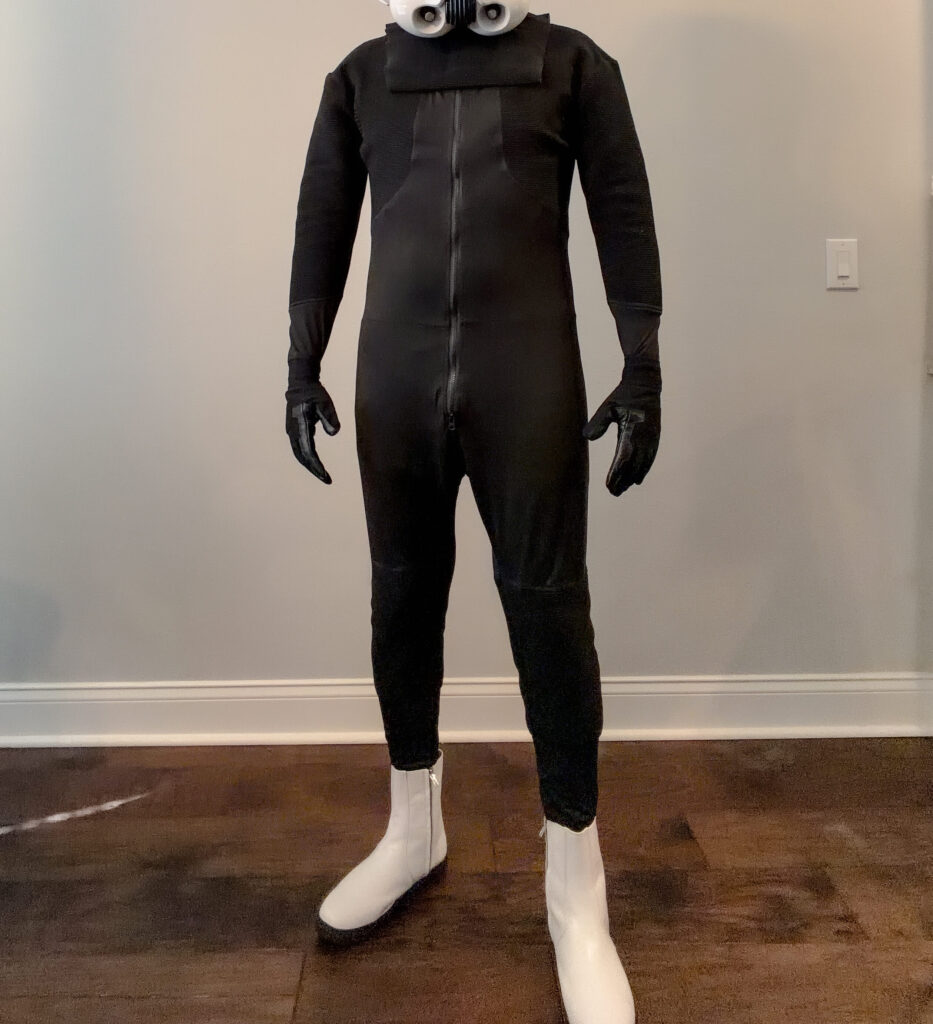
Flight Suit, Boots, Gloves, & Neck Seal
❯ Soft Goods / Flight Suit
Outside of the armor itself, the soft goods will likely represent one of the more expensive investments in your costume.
For many costumes, you can get away with relatively inexpensive athletic wear, such as a black “dryfit” top and pants, similar in principle to the approach taken with the Original Trilogy Stormtrooper. However, for Rogue One, the costume designers introduced a considerable amount of detail to the undersuit, despite much of it being concealed beneath the hard armor.
The distinctive ribbing visible between the armor components adds another layer of texture and definition to the costume, particularly when caught under certain lighting conditions. Personally, I think it’s one of the more underappreciated aspects of this generation of Stormtrooper.
Currently, there are only a handful of vendors offering dedicated Rogue One Stormtrooper undersuits, including Keep Trooping, Jimmiroquai, and Sheev’s Emporium. Their offerings vary considerably in price, construction, and attention to detail.
In my opinion, Keep Trooping offers the most well-rounded solution, striking a good balance between accuracy, quality, and affordability. Jimmiroquai offers a more budget-friendly alternative, utilizing a two-piece design rather than a traditional one-piece jumpsuit. Several builders have also praised its breathability and ease of wear.
At the other end of the spectrum is Sheev’s Emporium, offering a more premium interpretation of the original production undersuit, with a considerable emphasis on accuracy and craftsmanship. While I don’t have any personal experience with their soft goods, they’re certainly worth exploring if your budget allows.
❯ Neck Seal
Another small, but important, detail for your Stormtrooper costume is the neck seal. Unlike the rubber-like neck seals associated with the Original Trilogy Stormtroopers, the Rogue One design utilizes a ribbed fabric construction, more in keeping with the overall aesthetic of the newer generation of armor and soft goods.
Unfortunately, there aren’t a tremendous number of vendors offering this particular style of neck seal. Keep Trooping and Imperial Seamstress on Etsy are two options worth exploring, with Sheev’s Emporium being another potential avenue.
Depending on your chosen vendor and where you’re located, I’d recommend budgeting about $100 USD, including shipping.
While it may be tempting to purchase a less expensive Original Trilogy neck seal, there are some noticeable differences in the construction and appearance, so be mindful of which generation of Stormtrooper the product is intended for.
❯ Gloves
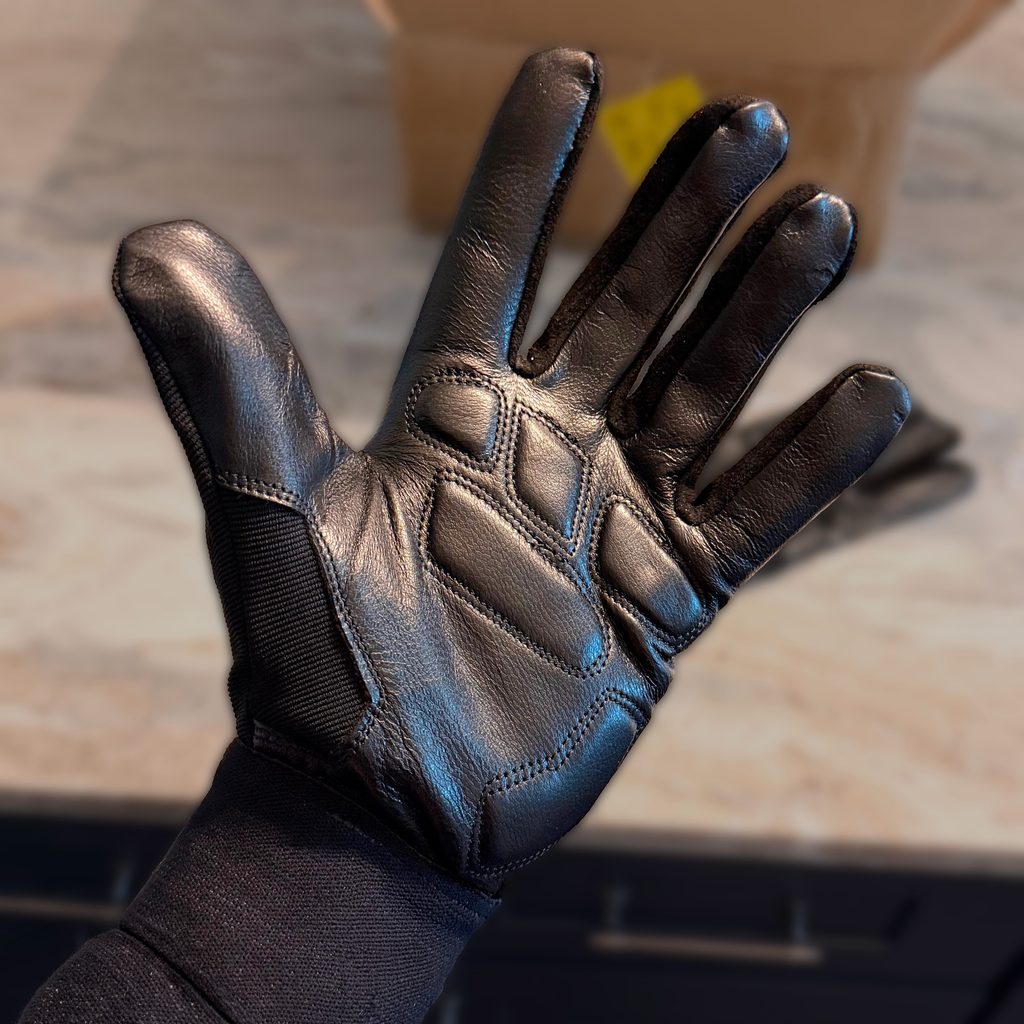
Much like the undersuit, the gloves underwent a considerable transformation with the newer generation of Stormtrooper costumes. While the Original Trilogy Stormtroopers utilized relatively simple rubber gloves, the newer designs introduced considerably more detail, an approach we first saw with the introduction of the First Order Stormtrooper in The Force Awakens.
Once again, Keep Trooping offers a solid option, and one I can personally recommend. Just be sure to properly measure your hands in accordance with their sizing guide before placing an order.
There are also several alternatives available through platforms such as Etsy, though I’d encourage you to do a little research into the individual seller before purchasing. Look for established vendors with a history of fulfilled orders, customer reviews, and photographs of their actual products.
Another option worth exploring is the secondhand market, particularly gloves originally produced by Endor Finders. Unfortunately, they’ve scaled back production in recent years due to rising costs and ongoing tariffs, but hopefully we’ll see them return to normal operations in the future.
The Rogue One and First Order Stormtrooper gloves are virtually identical in design, with the only difference being their color. If you come across a suitable pair of First Order gloves, dyeing them black may be a viable alternative, depending on the materials used.
Similarly, the Rogue One Stormtrooper, Death Trooper, and Shoretrooper share exact the same glove design. If you’re struggling to find what you’re looking for, sometimes it’s as simple as changing your search terms!
❯ Boots
Fortunately, there are several established vendors offering boots suitable for the Rogue One Stormtrooper, including Keep Trooping, CrowProps, and Teeka’s Workshop.
Each offers its own subtle differences in construction, fit, and appearance, but with all three generally falling within a similar price range, I wouldn’t necessarily recommend one over another. If you do opt for Keep Trooping, however, I’d personally suggest considering a half-size larger than your usual shoe size, based on my own experience.
Much like the gloves, the boots are interchangeable with those of the First Order Stormtrooper—no dye required this time around!
They do, however, differ from the boots worn by the Original Trilogy “Chelsea boots,” so be mindful of which generation of the costume you’re purchasing them for.
How Much Does It Cost to Build a Rogue One Stormtrooper?
If you’ve been mentally keeping track of everything we’ve discussed thus far, you’ve probably come to the realization that this is all beginning to add up.
And, well… you’re not wrong. Building a Rogue One Stormtrooper isn’t necessarily an inexpensive endeavor, but if you do it right, it’ll last for years to come!
However, depending on the avenue you choose to pursue, your access to certain tools and equipment, and the amount of work you’re willing to undertake yourself, there are opportunities to save a considerable amount of money. Rather than simply throwing a bunch of numbers at you, I’ve put together an interactive budget calculator utilizing estimated pricing from many of the vendors we’ve discussed throughout this article.
Feel free to experiment with different combinations to get a better idea of what your own Stormtrooper might cost!
Stormtrooper Budget Calculator
Your armor. Your build. Your budget.
So as you can see, there’s no shortage of ways to spend your hard-earned money on your path to serve the Empire.
Regardless of which route you ultimately pursue, I’d encourage you to establish a realistic budget for the entire costume before committing to any one component. The armor itself may be the most recognizable aspect of a Stormtrooper, but as we’ve now established, there’s considerably more to it than a collection of white plastic parts.
And remember, there’s absolutely nothing wrong with purchasing these components over time. One of the beautiful things about this hobby is that you can work at your own pace, spreading the cost of your build over several months, or even a year or two. There’s no rush, and there’s certainly no obligation to purchase the most expensive version of every component.
Ultimately, the goal is to build a costume you’re proud of, without breaking the bank in the process.
Now comes the fun part—putting it all together!